
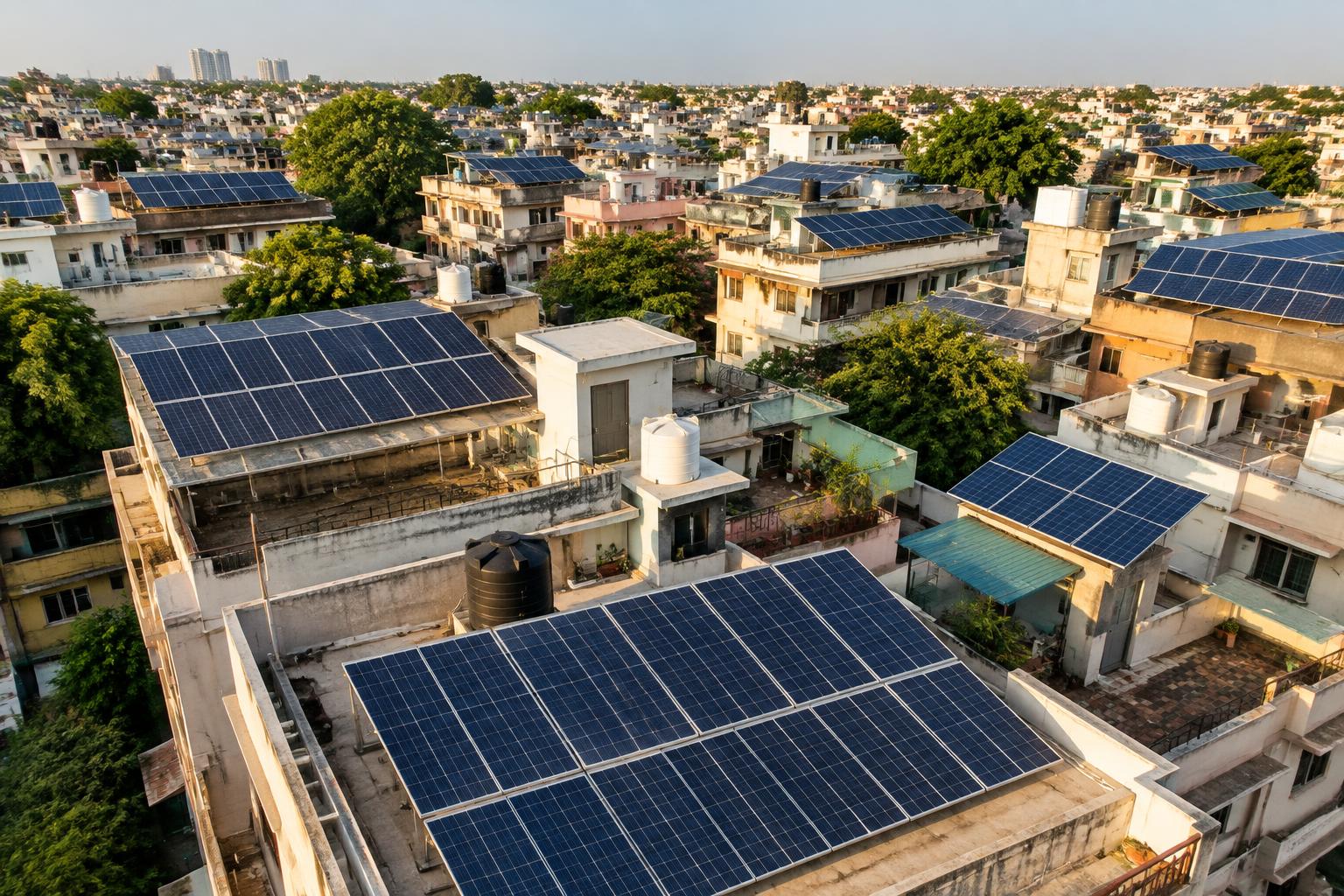
Delhi's revised Solar Energy Policy offers 3-kW rooftop systems at effectively zero upfront cost for eligible households, targeting 2.3 lakh rooftops and 500 MW of new capacity.
Zero upfront cost for eligible households
Delhi is set to turn thousands of rooftops into mini power plants. The government has approved the second amendment to its Solar Energy Policy, offering 3-kW rooftop solar systems at zero upfront cost to eligible households consuming up to 400 units a month.
The revised policy, cleared at the 40th Cabinet meeting, targets solar installations on 2.30 lakh rooftops and the addition of 500 MW of rooftop capacity across the city.
How the ₹1.75 lakh support works
Households with an average monthly consumption of up to 400 units in FY 2025-26 will be eligible, subject to technical feasibility. The Centre provides up to ₹78,000 while Delhi adds an equal capital subsidy plus a top-up to bridge the gap between the subsidy and the tendered cost.
For a 3-kW system costing around ₹1.75 lakh, households consuming up to 400 units effectively receive the system free through the central and state subsidies plus a ₹19,000 top-up. For a 2-kW system at about ₹1.30 lakh, consumers receive ₹60,000 central subsidy, ₹52,000 Delhi subsidy and an ₹18,000 top-up.
Free power subsidy plus solar savings
Consumers using up to 200 units will continue receiving the existing 100 per cent electricity subsidy and will also benefit from solar generation and payments for surplus power exported to the grid.
A 3-kW system can generate around 300 units a month. For a 200-unit household, roughly 100 surplus units could be exported, giving an estimated additional benefit of about ₹950 per month. For households consuming 201-400 units, the estimated average monthly benefit is ₹1,659, and above 400 units it rises to about ₹2,143, with surplus power paid at ₹6.50 per unit.
Housing societies and easier processing
A proposed 100-kW common-area system for group housing societies, costing about ₹45 lakh, will receive ₹18 lakh central and ₹11 lakh Delhi subsidy, leaving ₹16 lakh as consumer contribution against an estimated monthly benefit of ₹81,247.
IPGCL will select vendors through competitive bidding and oversee installation, coordination and grievance redressal. Vendors will provide free operation and maintenance for five years, after which consumers can opt for paid service through discoms, for a system lifespan of roughly 25 years. Net-metering processing has been reduced from 75 days to 25 days, and registration fees for systems up to 10 kW have been waived.
What this means for you
For most Delhi homes, the economics of rooftop solar have never been better — but eligibility, sizing and net-metering paperwork decide whether the benefit actually lands. Our team handles the survey, system design, subsidy filing and discom liaison end to end.